One little detail on certain cars that I always thought was cool was frameless door glass. You don’t see it much anymore; I don’t know if the new safety regulations make it more difficult, or if designers have just abandoned the idea, but I kind of miss it. So today we’re going to look at two coupes from years past with no frames around their door glass.
Yesterday’s cars didn’t have anything in common except the price, and the fact that they were both pretty awful choices. You had to choose between a complete lack of horsepower, and a complete lack of taste. The Dodge’s junkyard status and horrible modifications were just too much for the majority of you, though, so the Aspire sort of won by default. This is probably the only thing an automatic Ford Aspire will ever win, so I’m happy for it.
Actually, I kind of like that little blueberry. I don’t want to try to drive it over a mountain pass, or in DC traffic, but for buzzing around town, it looks like just the ticket. It would be a cinch to park, and you’d never have to worry about anyone stealing it; it would be the world’s slowest getaway vehicle.

Everyone has their little details that they love about cars; one of mine has always been frameless door glass. There’s just something cool about opening the door to a car with the window down and having nothing sticking up above the top of the door. It does have its drawbacks; a friend’s Camaro in high school had the most rattly glass I’ve ever seen. When the windows were half-open, you could move the glass an inch back and forth. His dad warned him repeatedly to only close the doors with the windows all the way up, or all the way down, nothing in between, to keep from breaking them. But the cars that I have had with such windows have all been fine, including my MGB GT, which scores bonus points for having frameless windows alongside flip-open vent windows, which are also very cool.
But enough about my weird fenestral predilections. Let’s look at some cars.
1997 Buick Riviera – $3,100
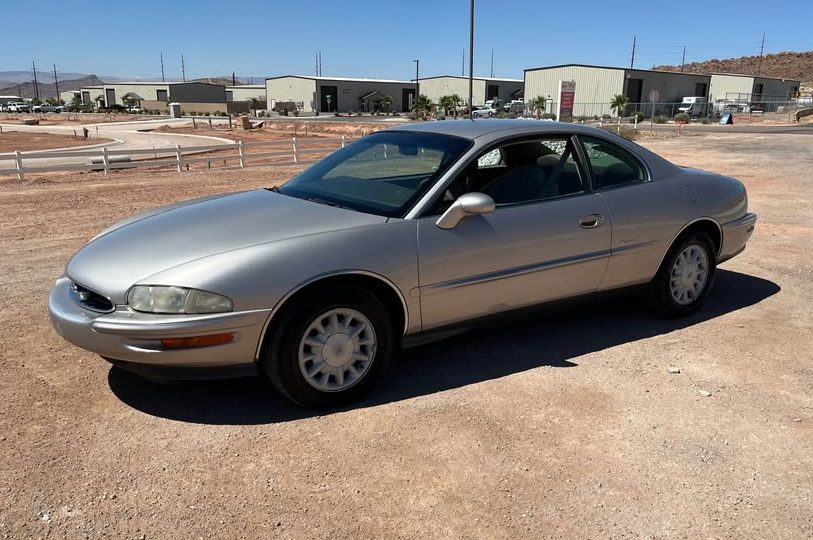
Engine/drivetrain: Supercharged 3.8-liter OHV V6, four-speed automatic, FWD
Location: Hurricane, UT
Odometer reading: 79,000 miles
Operational status: Runs and drives well, but needs tires
The Buick Riviera pretty much bookended the personal luxury coupe era. There were a few that came before it, and a few that straggled on after it, but for the bulk of the style’s popularity, the Riviera was there. And for much of that time, it was one of the coolest options around. Sure, there were some pretty sad offerings in the late 70s and early 80s, but all cars were sad then. The Riv started strong, in 1963, and I’d say it ended pretty strong as well, with this final generation.
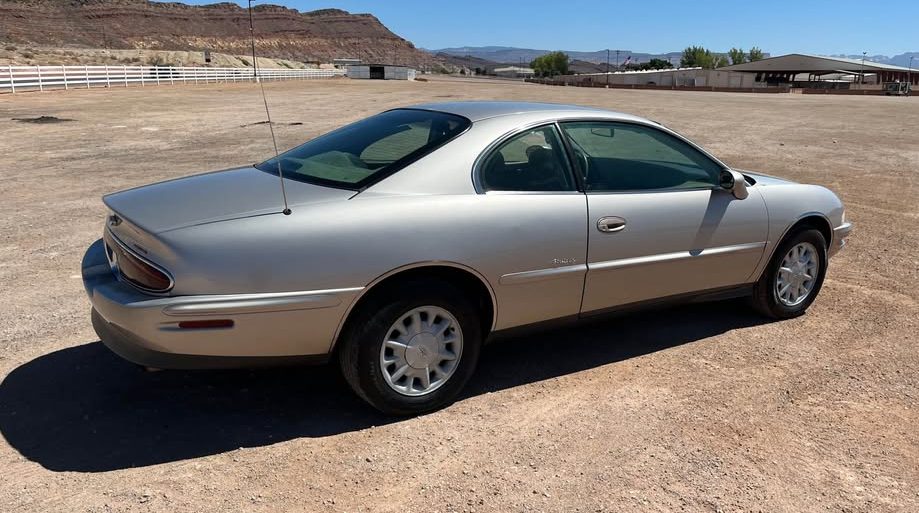
The Riviera went front-wheel-drive in 1979 and stayed that way for the rest of its run, generally using the same platform as the Oldsmobile Toronado and Cadillac Eldorado, both of which were already FWD. But while the Toronado bowed out in 1992, and the Eldorado suffered the indignity of a string of terrible engine choices, the Riviera got some serious muscle back in its final generation, courtesy of the supercharged 3800 Series II V6. It puts out 240 horsepower, or about twice what the V6 in the early 80s Rivieras had to work with. Ain’t technology something? The seller says it runs and drives well, but has old tires, so you should probably replace them before using too much of that power.
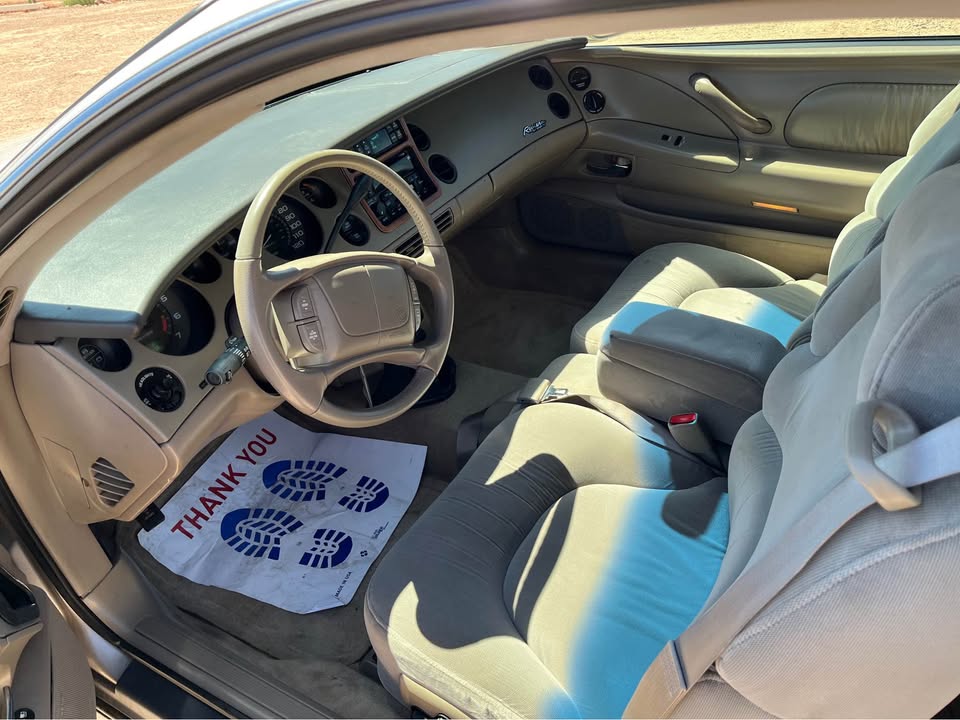
The Riviera was Buick’s flagship, and therefore heavily optioned, but this one has an interior I’ve never seen before, with a cloth split-bench seat and a column-mounted shifter. Every other Riviera I’ve seen from this era had bucket seats and a center console, and nearly all of them had leather. It looks nice, just unexpected. The air conditioning is not blowing cold, and not blowing out of the dash vents, either. My guess is that the actuator motors for the HVAC system have failed; they have a finite life on GM cars. Sometimes they’re easy to get to, and sometimes they’re really not. But they’re cheap parts.
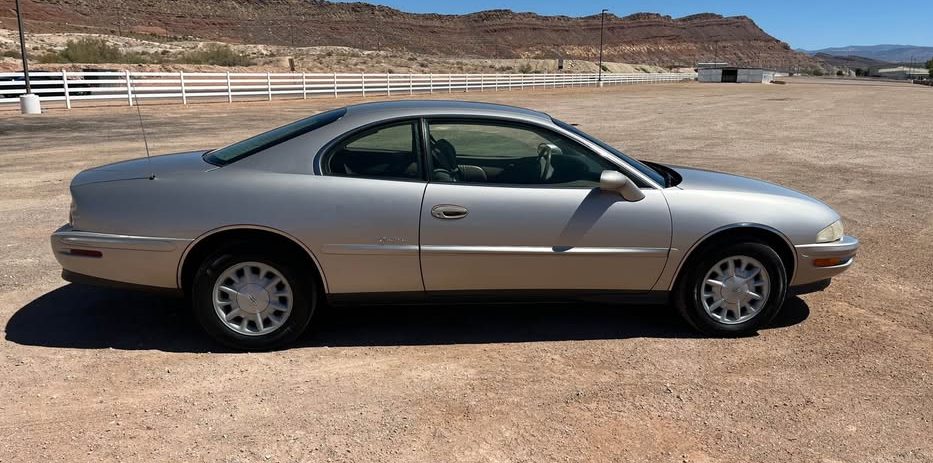
I remember a coworker of mine at the garage referring to this style of Riviera as the “Lady Remington,” complaining that its rounded shape looked like a women’s electric shaver. But he had terrible taste in everything else, too; this is a nice-looking car. This one could be a more exciting color, but it’s in good condition.
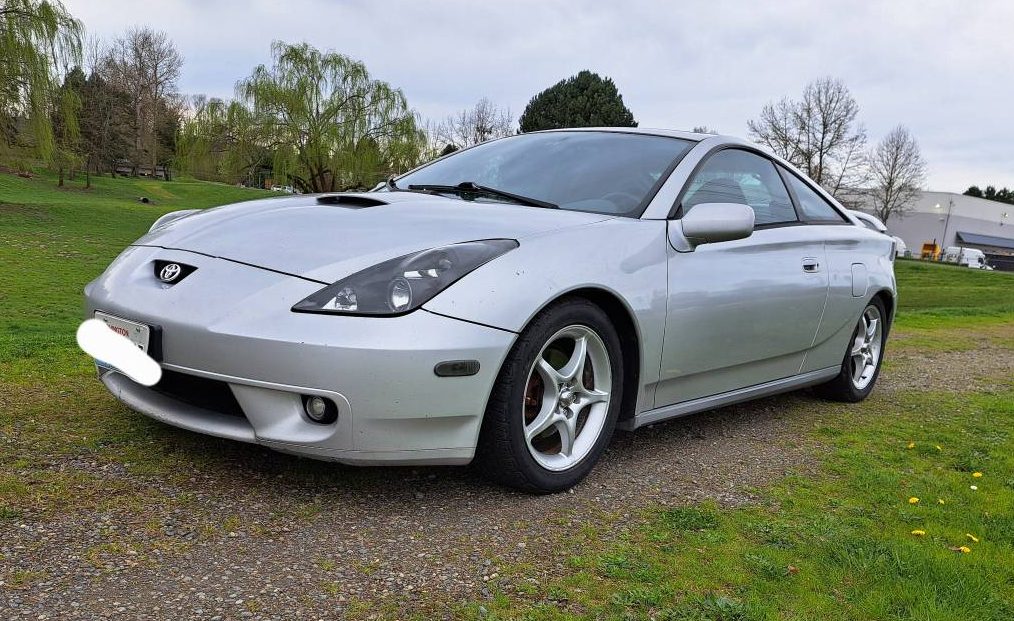
2000 Toyota Celica GT-S – $3,100
Engine/drivetrain: 1.8 liter DOHC inline 4, six-speed manual, FWD
Location: Kent, WA
Odometer reading: 272,000 miles
Operational status: Runs and drives well, driven daily
The Toyota Celica certainly was never a personal luxury coupe, but it could be called a pony car, at least in its early days. Like the Riviera, however, it switched to front-wheel-drive halfway through its life, though for a few glorious years a turbocharged all-wheel-drive version was offered. For its final generation, the Celica was FWD only, with a choice of two twin-cam four-cylinder engines.
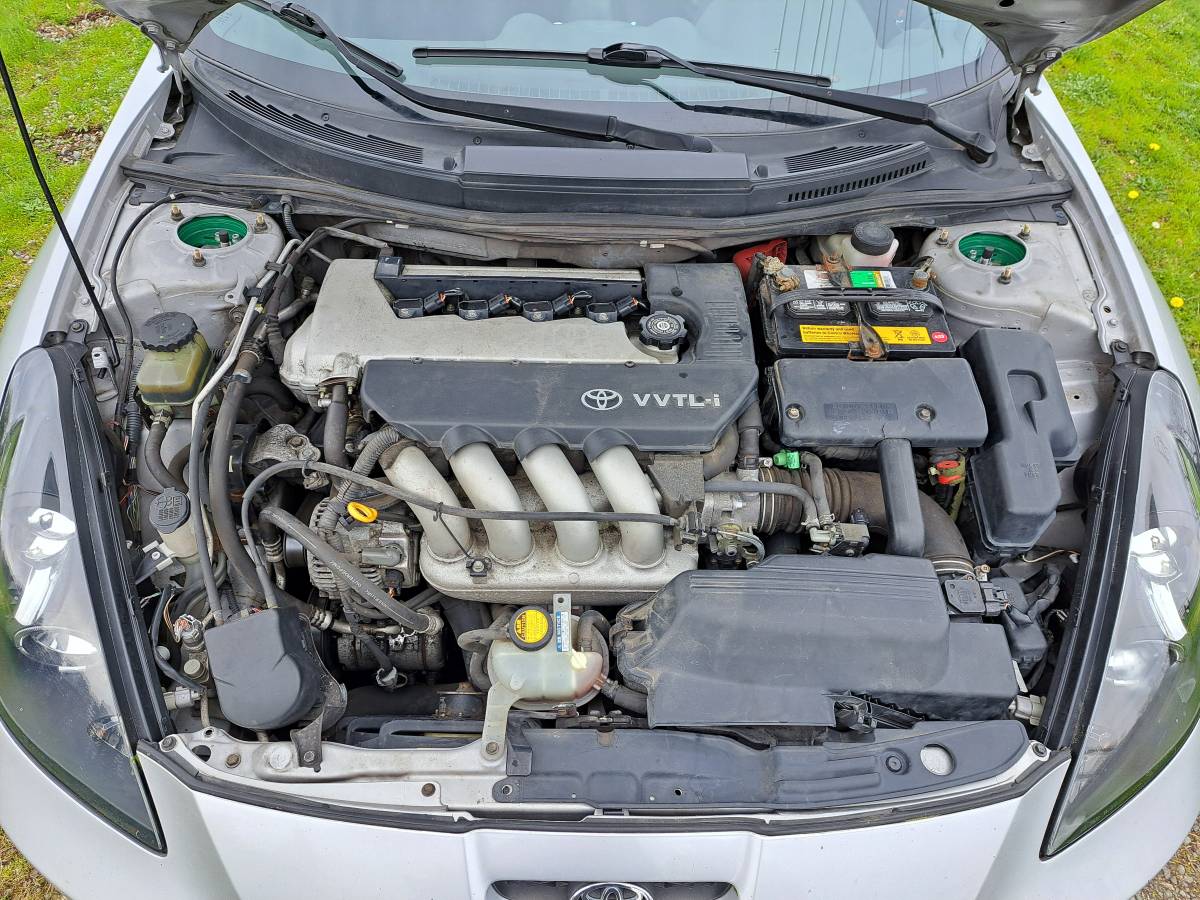
This is the GT-S model, with the more powerful 2ZZ-GE engine and a six-speed manual transmission. It has a ton of miles on it, but the seller says it runs great, and they still drive it daily. It’s not quite stock; the suspension has been lowered, and for some bizarre reason, the power steering has been deleted. I don’t know why anyone would want to remove the power steering on a nose-heavy FWD car with wide tires; exercise, maybe? At least all the stuff is included to put it back.
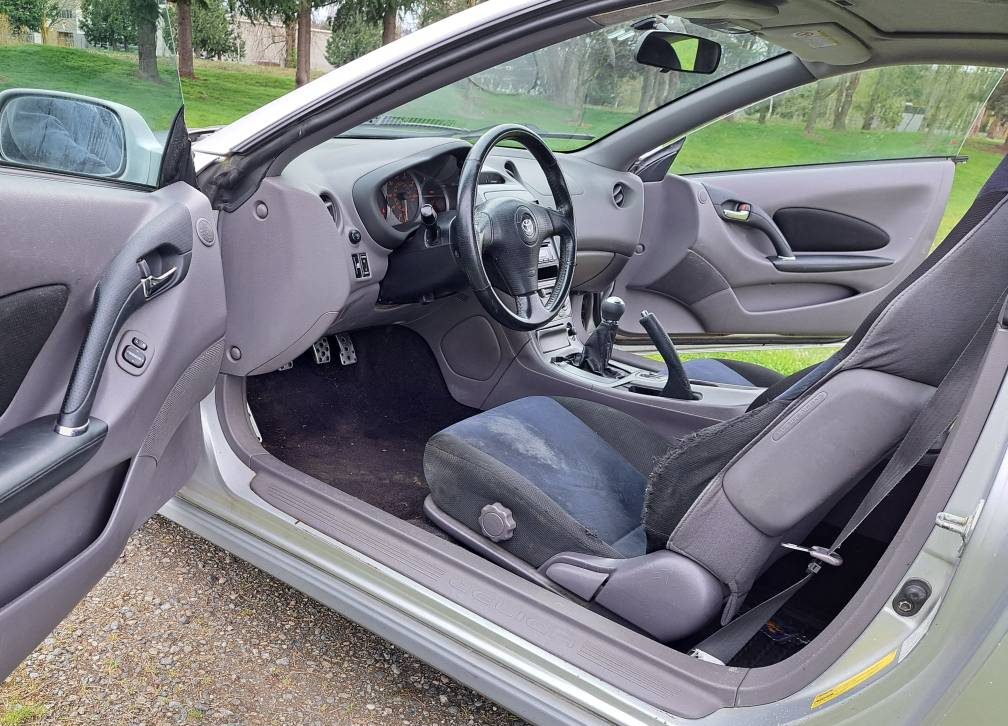
It’s showing its age in the interior, with lots of wear on the driver’s seat, and some general grubbiness. But it’s a Toyota, so I assume everything still works. It has a sunroof, and there’s some weirdness going on around the edges of it, but the seller says it works fine and doesn’t leak.
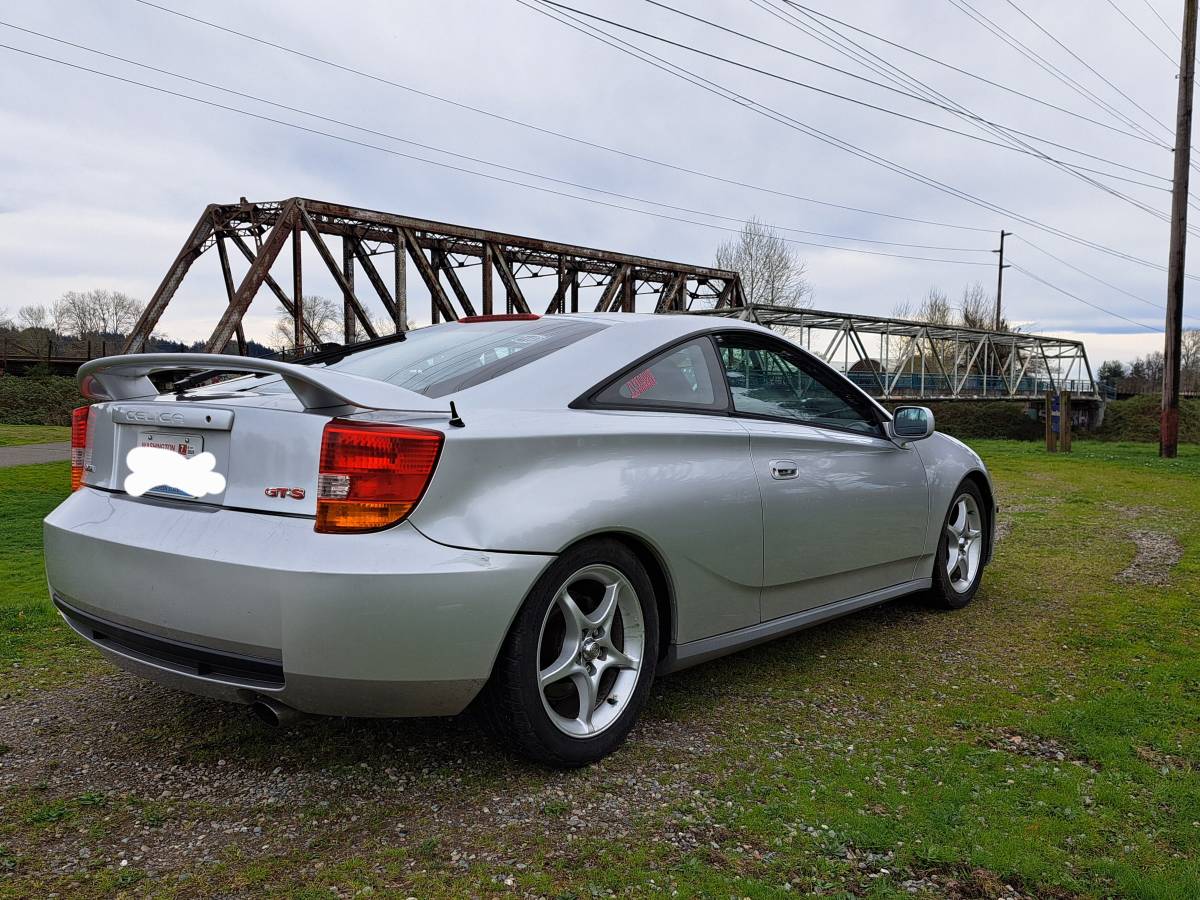
It has some dings and scuffs, but that’s to be expected with this many miles. One issue that happens a lot with cars this age is cloudy headlights. There are polishing kits available to remove the cloudiness, but the seller of this Celica solved the problem in a better way – by replacing them.
$3,100 isn’t nothing, but it’s still pretty cheap for a running, driving car these days. They’ll both need a little work, but I think they both have good bones. So would you rather buy tires and do HVAC work, or rebuild a power steering system? The choice is yours.
The post Two-Door Coupes With Frameless Glass – 1997 Buick Riviera vs 2000 Toyota Celica appeared first on The Autopian.

