Happy 30th, Expedition
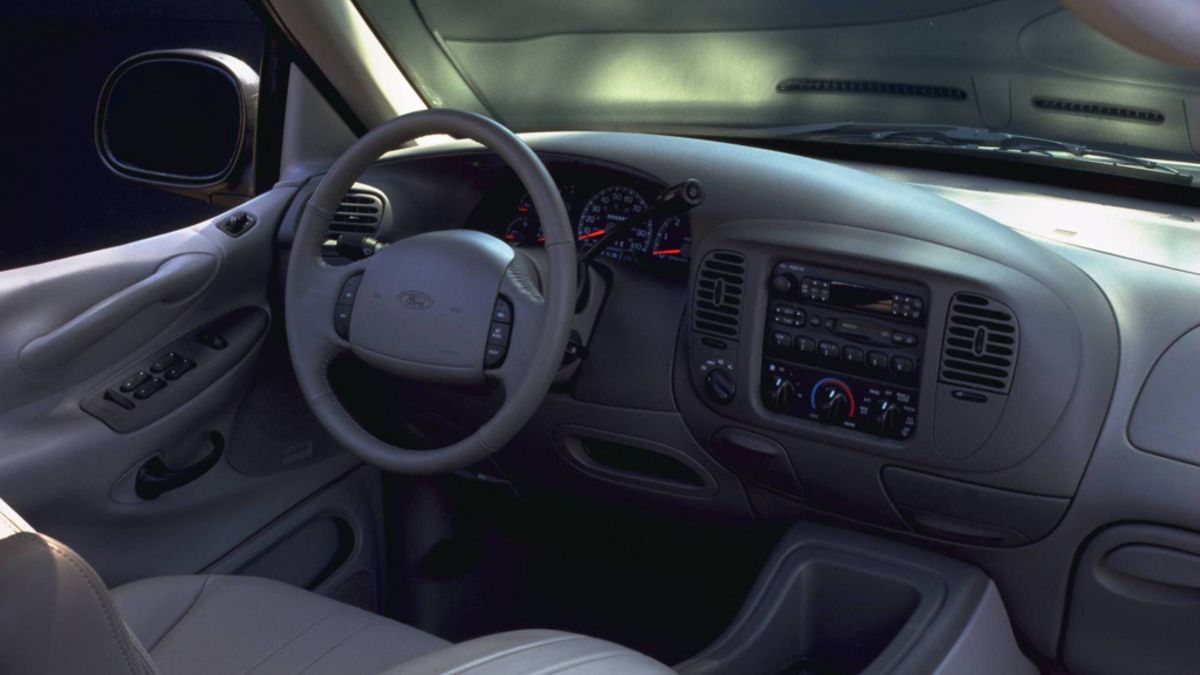
2026 is a big year for the Ford Expedition. The full-size SUV celebrates its 30th anniversary, and it was a model that the Blue Oval needed at the time. It was Ford’s long-overdue rival to GM’s full-size SUVs, and has been a steady seller since. The current success of the Expedition wouldn’t have been possible if it hadn’t hit the right notes in the first place.
So, with this milestone, we reckon now would be a good time to take a look back at the first-generation Expedition. We dive into its development, history, and specifications, and see just how far this full-size SUV has come over the decades.
Ford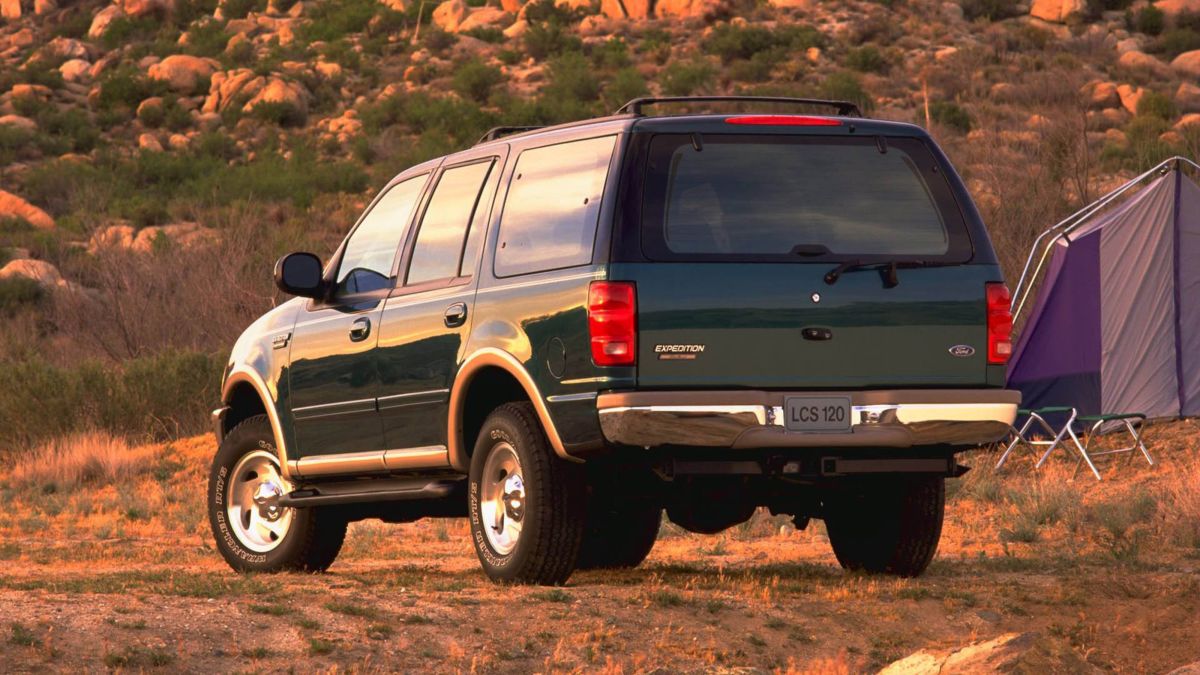
Before the Expedition
Prior to the Expedition, Ford didn’t have much of an answer to GM’s large SUV lineup. Sure, there was the Bronco that went head-to-head with the Blazer, but it never had a four-door version. Granted, the Suburban was a much larger vehicle, but the fact remained that there was no Ford equivalent that could, at the very least, come close. There were the Ford Centurion C-150 and C-350, but those were conversion models and not official products.
That response came in the form of the UN93 project. Plans for it started as early as 1991, a few years before it was even approved, but efforts came in full swing starting in 1993. It was designed to succeed the Bronco, and four doors were planned from the start. The Expedition was developed in parallel with the tenth-generation F-Series, which carried the project name PN96.
Prior to its premiere, spy shots referred to the SUV as the four-door Bronco. Some publications at the time reckoned it would keep the Bronco name, but we all know what happened next.
Ford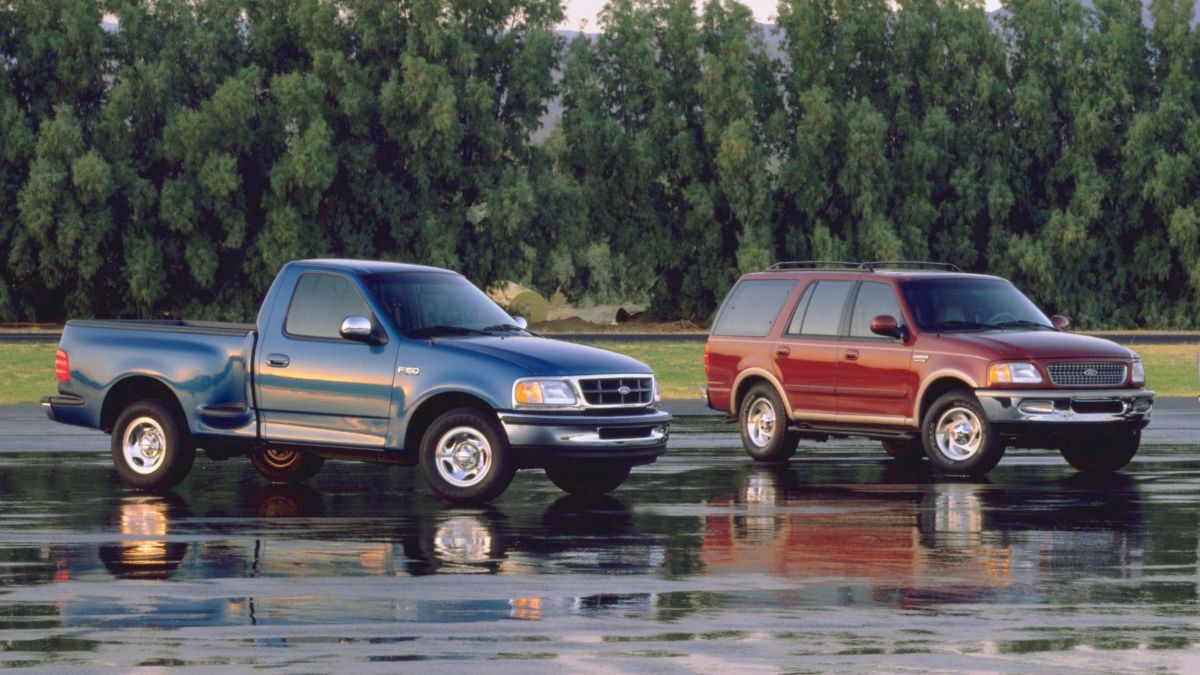
The World Premiere
The Expedition broke cover on May 9, 1996, with production kicking off on July 22 that same year. It was formally launched on October 2, 1996, for the 1997 model year. It was great timing, too, as Chevrolet and GMC rolled out their versions of shortened Suburbans a year prior in the form of the Tahoe and Yukon, respectively. Ford had the perfect rebuttal for GM’s twins.
Upon launch, there were two trim levels available: XLT and Eddie Bauer. Both came in two- and four-wheel-drive guises, but had different engines under the hood. XLTs came with the 4.6-liter Triton V8, which was essentially the Modular V8 engine for truck applications. The Eddie Bauer, on the other hand, got the larger 5.4-liter engine as standard. The XLT made 215 hp and 290 lb-ft, while the Eddie Bauer put out 230 hp and 325 lb-ft.
Ford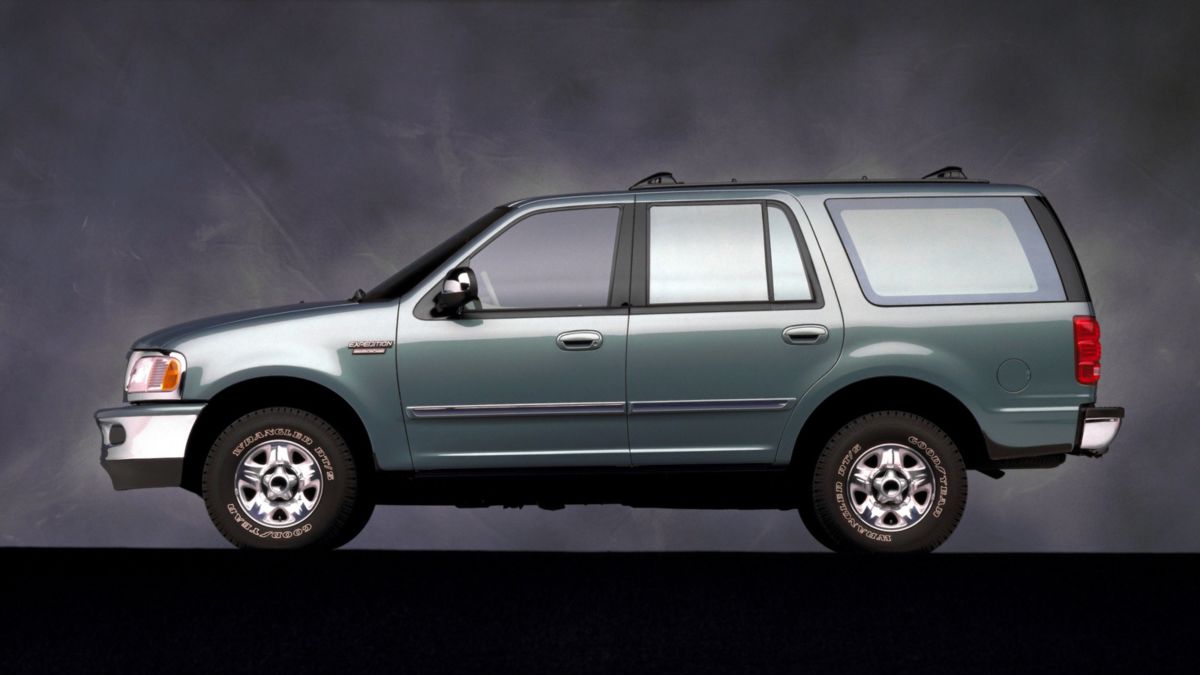
An Odd Version
This generation of the Expedition was also sold in the Philippines, which, later in its life cycle, had an odd specification. Initially, it mirrored the same models in the U.S., offered in either XLT or Eddie Bauer trims, though those were four-wheel-drive only. Those models were sold only from 1998 to 1999 because, by 2000, heavy taxes were levied on any imported SUV or MPV-like vehicle that didn’t come with at least 10 seats. A well-known example of that was the ’10-cheater’ Honda CR-V.
Ford Philippines’ response to that? To be able to sell it for less, it had to get rid of four-wheel drive. It then came with a pair of jump seats in the cargo area, removing the forward-facing third-row seats to accommodate four people in the rearmost seats. Mind you, it wasn’t comfortable as a ten-seater. Ask this writer how he knows.
Ford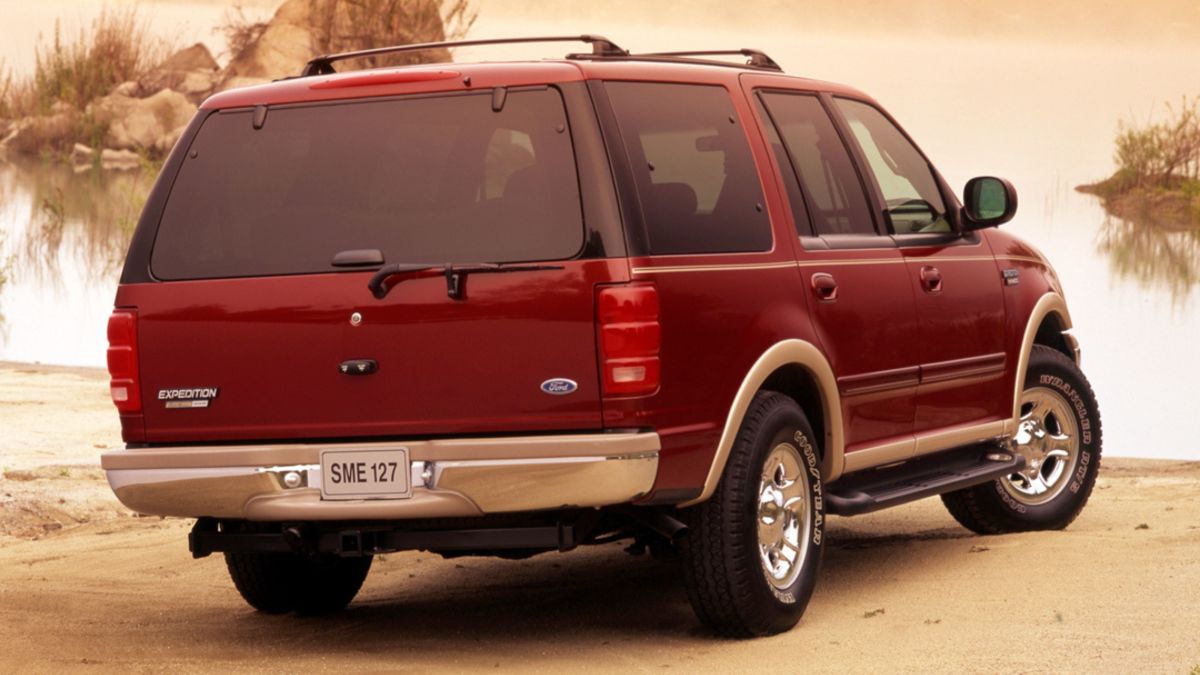
Updates and the Model That Got Away
The Expedition received an update in 1999, featuring a larger front grille, a reshaped front bumper, and new fog lights. Those engines also gained more power, with the 4.6-liter now making 240 hp and 291 lb-ft, and the 5.4-liter at 260 hp and 350 lb-ft. The 5.4-liter also received a new 4R100 transmission, although the 4.6-liter retained its 4R70W automatic.
There was one version that we wish had come to fruition, but was unfortunately rejected. It was the Expedition SVT Thunder and featured the same 360-hp supercharged 5.4-liter from the F-150 SVT Lightning. The Thunder was supposed to be for the 2000 model year, but given the end of the first-generation Expedition’s production just two years later, management said no.
Following the 1999 facelift, the SUV received smaller updates, including option packages and a few interior and exterior tweaks. The final model year for the first-generation Expedition was 2002, with approximately 1.2 million sold worldwide in six years. It’s still, by far, the most-sold version of the SUV, even after all these years.
Ford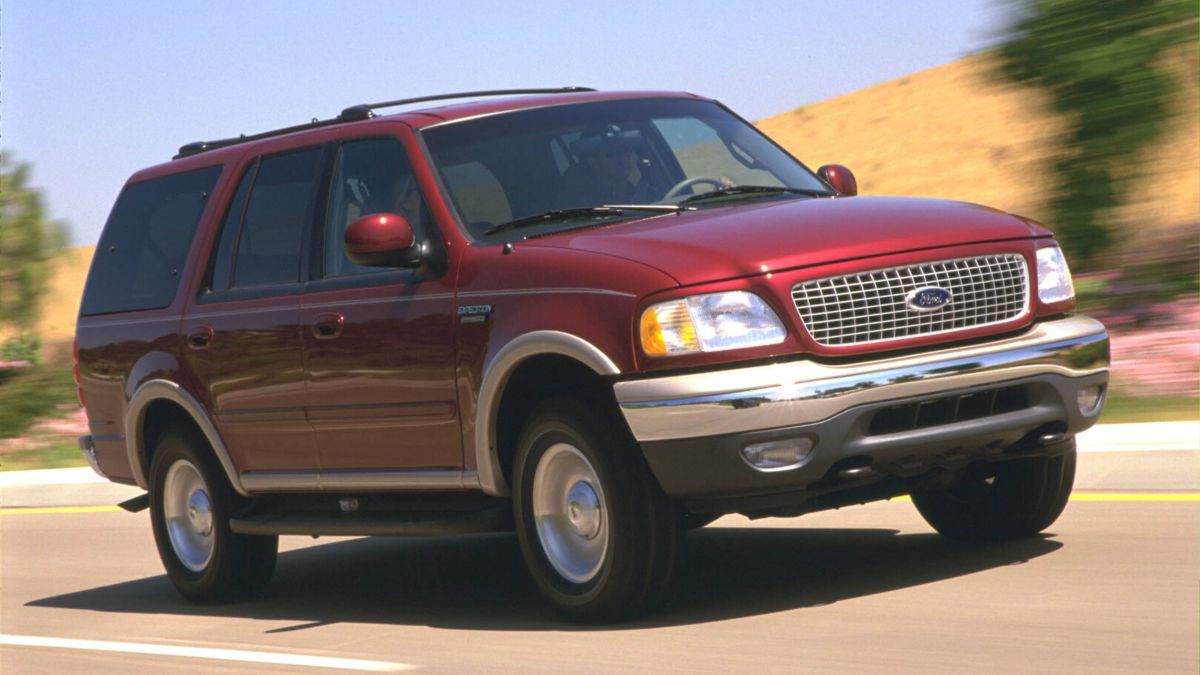
Ford